From SEO to GEO: the start of a new era
From 2000, Google, SEO and SEA decided how customers found you. Whoever ranked at the top got the click. In 2026 that is shifting: customers put their question to an AI search engine and get an answer, with a recommendation in it. Whoever is named there gets the conversation. That is what I build on now.
What many companies are noticing
Your campaigns are delivering less, and you are not doing anything wrong.
Same budget, same ads, same keywords, and still less comes in. That is usually not down to your campaign. The answer to your visitor's question now sits at the top of the search page, and that is where they stay.
One percent click a source inside the answer itself. Pew Research Center, 68,879 searches by 900 US adults, April 2025
From searching to asking
Twenty-five years of search, and now a new beginning.
Around 2000, Google and AdWords made search and search advertising the way businesses got found. Chrome and the smartphone then made it a daily routine. Since ChatGPT arrived at the end of 2022, people ask questions instead of typing keywords, and since 2024 search engines often show an AI answer above the links as well.
What is the difference between SEO and GEO?
SEO (search engine optimisation) means setting up your website so that search engines rank it high in the list of results. The goal is a click: the visitor picks from ten links.
GEO (generative engine optimisation) means publishing your knowledge so that AI search engines such as ChatGPT, Gemini, Perplexity and the AI answers in Google understand you, trust you and name you in their answer. The goal is a recommendation: the AI helps choose.
How a customer finds you
What it looks like
What an AI answer shows.
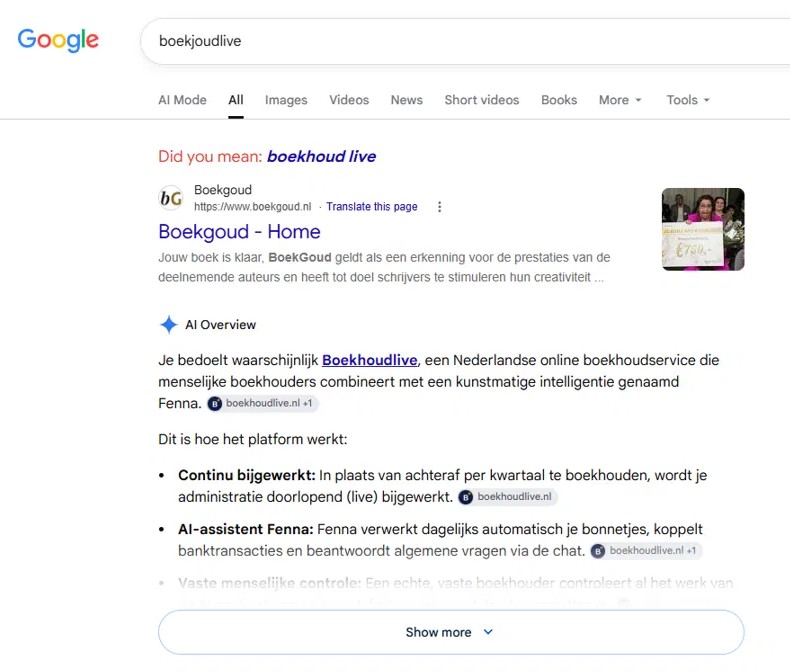
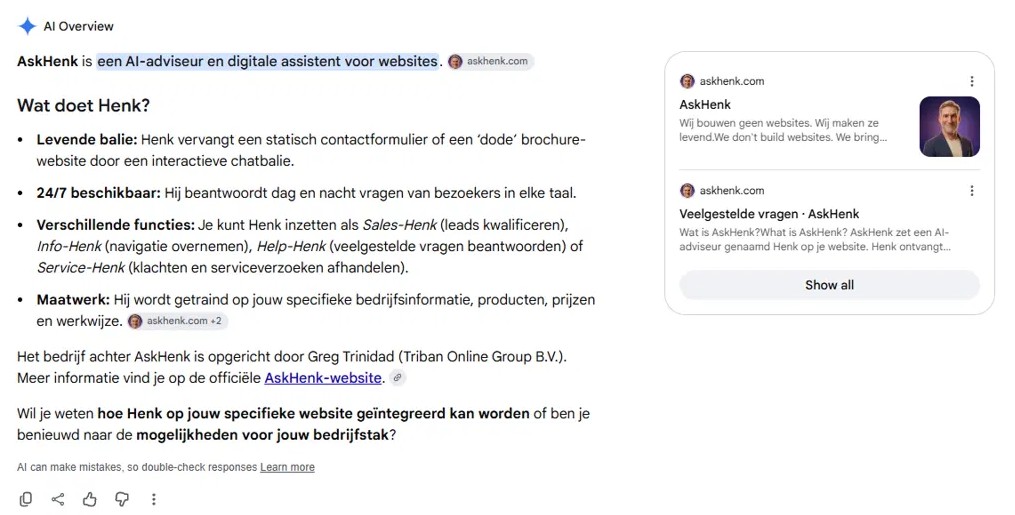
Two Google searches, November 2026. They show how such an answer comes about. This is an explanation, not a measurement: one search, at one moment.
What to take from this
- An AI answer is as current as the last time your page was read. Whatever is outdated on your site comes back outdated in the answer.
- These are brand searches. People who already know your name will find you. What sells is a question that does not contain your name, such as "how do I turn website leads into customers".
- For questions like that, the answer cites explanatory articles, not product pages. The page that answers the question gets named, not the page that sells the product.
A common misconception: you do not need a special file or extra code to appear in Google's AI answers. Google says so itself. What counts is pages that answer the question well. Source: Google Search Central, AI features and your website
SEO and GEO side by side
| SEO | GEO | |
|---|---|---|
| Goal | A high position in the list | Being named in the answer |
| Who reads | A person scanning links | An AI reading and summarising sources |
| What the customer sees | Ten links and ads | One answer, with a recommendation |
| What works | Keywords, page speed, links from other sites | Clear definitions, sourced facts, structured data, the same name and explanation everywhere |
| Result | A click to your site | A warmer visitor who already knows who you are |
| Measuring | Rankings and traffic | Mentions in AI answers, traffic from AI, searches for your name |
Why now
Whoever defines their field now will be cited later.
An AI search engine answers with what it recognises as a reliable source. Sources that explain a concept clearly and consistently get picked up. That is the moment we are in: the concepts of the new search landscape are being set now. In 2024, analyst firm Gartner predicted that traditional search engine volume would drop by 25 per cent by 2026 as people put their questions to AI chatbots and other virtual agents.
Source: Gartner, press release of 19 February 2024. A forecast, not a measurement.
What we do now
This site is the example.
- The official definitions of Diagnostic Selling and Digital Sales Consultant are identical everywhere, in Dutch and English
- Every page has structured data: definitions, services, frequently asked questions
- Texts that directly answer the question a customer types, like this page
- An AI employee answers questions on the site itself, so the site talks back instead of only showing
- Content starts from real customer questions, not keyword lists
We do the same for clients with the services below.
Frequently asked questions
Is SEO over, then?
No. AI search engines read the web and rely on the same signals: a fast, well-built site with clear content. GEO builds on SEO. But businesses that only do SEO increasingly miss the moment the customer makes their choice.
What is GEO in one sentence?
GEO, generative engine optimisation, means publishing your knowledge so that AI search engines understand you, trust you and name you in their answer.
How do I know whether AI names my business?
Ask ChatGPT, Gemini and Perplexity the questions your customers ask, and see who gets named. In our baseline measurement we do this systematically, alongside the classic SEO measurement.
What does GEO have to do with Diagnostic Selling?
An AI answer takes over part of the orientation. The customer who then lands on your site already knows a lot. A pitch no longer helps, but establishing what is still missing for their decision does. That is what Diagnostic Selling is for.
Will your business be named?
The sales diagnosis measures how you are found today, in Google and in AI search engines.